Page 221 of 289

Good blackfish conditions

Though the weekend looks poor at this time, the next two days appear to be ideal for blackfishing which is still holding up inshore due to the lack of very cold water.

The  forecast for Thursday is just west at 5 knots with seas of one foot or less. Getting set on anchor may be the biggest problem for blackfish boats.

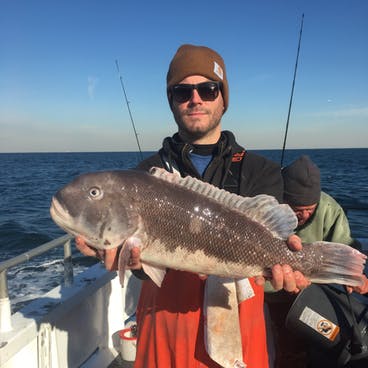
At Belmar, the Ocean Explorer reported good Tuesday blackfishing (see photo below) with many of the tog in the in the 5-8-pound class and some limits along with a few keeper cod and ling. The Big Mohawk will also be sailing open tomorrow at 7 a.m.

Oc. Ex. tog

At Point Pleasant, the Mimi VI is sailing open Mondays and Fridays in January from 6:30 to 4 with a maximum of 15 passengers for a fare of $120 that includes all crabs. Thursdays and Saturdays will be limited to 25 at 7 a.m. with green crabs provided for an $80 fare. Call 732 370-8019 for reservations.

The Jamaica from Brielle is hoping for weather good enough on Saturday when they’ve scheduled a trip to offshore wrecks for jumbo porgies, cod and pollock at 1 a.m.  Call 732 528-5014 for reservations.

The Feb. 1 Canyon Runner Seminar in Atlantic City is almost sold out, but they still have five free tickets for active or retired military. Adam La Rosa is also offering $50 off on tickets for First Responders. Call 732 272-4445.

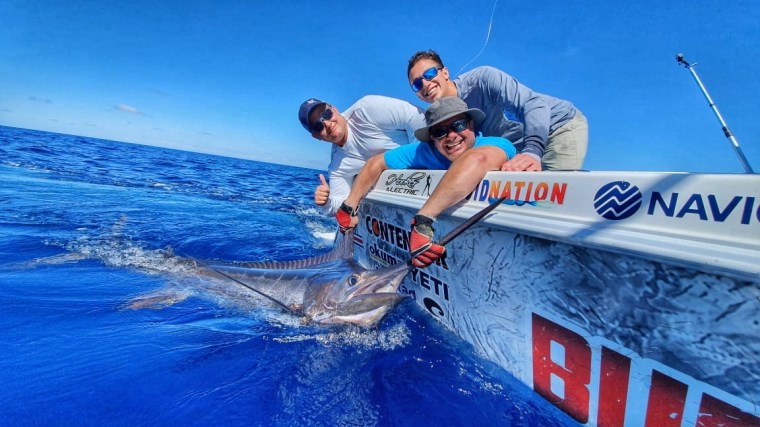
Rio Zancudo Lodge in Costa Rica recently had a group from White Water Marine on Long Island at the camp to enjoy a run of yellowfin tuna in the 80-110-pound class plus a 180-pounder. They also caught blue marlin and the range of inshore species from snappers to roosterfish.

Rio Zancudo blue

N.Y. Boat Show opens tomorrow

The New York Boat Show drops anchor in the Convention Center tomorrow and continues through the weekend. Weekday show hours are from 4 to 8:30 p.m.  Admission is $16, but you can get a discount by buying in advance. Military and First Responders receive a $3 discount on Wednesday by showing ID at the box office.

Light winds bode well for anglers the next two days. It’s northwest at just 5-10 knots Wednesday and north at 5 knots Thursday. The Big Mohawk from Belmar will sail open tomorrow for blackfish at 7 a.m., and reservations for Thursday can be made by calling 732 944-9606.  The weekend looks like a blowout, and Friday may also be out due to an expected “giant” swell which is a killer for tog fishing.

It wasn’t any bargain in Florida this morning as temperatures dropped to the 30s and northwest winds produced a chill advisory. I had to switch to “big boy” pants,  and my hands were cold for only the second time ever in Florida as I briefly fished a pond in Ft. Myers to catch a small bass on Gulp in order to keep alive my streak of not getting shut out any morning since coming down in November.

Only five days left in IGFA Auction

There are only a few days left in which to bid on everything from fishing tackle to dream trips throughout the world in the 36th  IGFA International Auction. Don’t hesitate to check out all that’s available by visiting info@igfa.org.

Capt. Jim Freda of Shore Catch Charters will be among those providing seminars at the Fly Fishing Show being held this weekend at the N.J. Convention & Expo Center in Edison.

The Canyon Runner Seminar in Atlantic City on Feb. 1 is almost sold out. In addition, there are 10 tickets still available for active duty and retired military. Call 732 272-4445.

Capt. Paul Eidman of Anglers for Offshore Wind Power will be presenting a free 6 p.m. seminar regarding that situation on Feb. 6 in the Forked River Tuna Club at 10 Bay Avenue.   Call Eidman at 732 614-3373 for additional info.

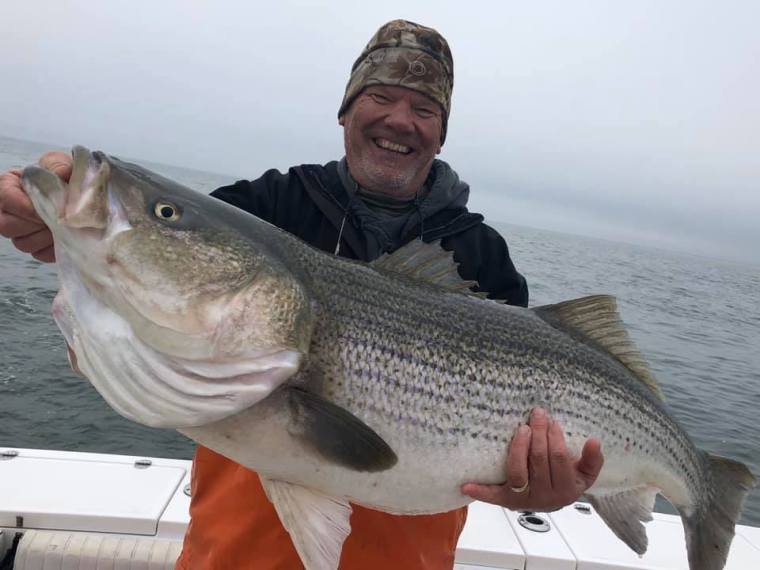
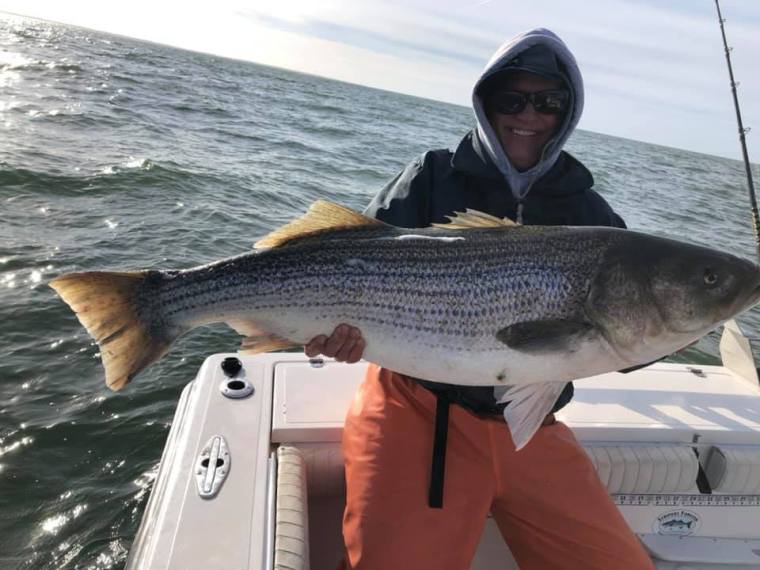
Chuck Manny continues to enjoy great catch and release striper action at Cape Charles, Virginia on his Ty Man. When some friends had to back out of a half-day trip last week, Manny trolled by himself to release seven of the roe-laden bass from 35 to 51 pounds. That brought the boat’s 50-pound bass total up to 17 this winter.

Light west winds should provide great fishing conditions in NY/NJ Bight this week. The forecast for tomorrow is northwest at just 5-10 knots.

Where did the bluefish go?

There’s a lot of speculation as to the rather sudden virtual disappearance of bluefish over the last few years, but it’s pretty sure that they didn’t swim overseas.

Martin Smith of Sea Bright brought up that subject in a reply to my last blog by mentioning that he saw 10-12-pound blues in fish stores at Cadiz, Spain. He noted that they were highly regarded as food there.

Actually, bluefish are found in widely separated areas of temperate and tropical waters worldwide. The IGFA world record when I was growing up was a 24 3/16-pounder from the Azores in 1953. It seemed impossible that we’d ever see anything like that in the U.S., but the upcycle of blues in the 1960’s concluded when James Hussey trolled a 31 3/4-pounder in Hatteras Inlet on Jan. 30, 1972.

I’ve caught bluefish in such unexpected areas as the Florida Keys, Trinidad and South Africa — though they were all small blues caught on the bottom with bait. Obviously, such populations are isolated, and I’ve never heard of cyclical abundance in those areas.

Though there have been signs of a bluefish problem for a few years, there was a good sign last spring. We had been getting great inshore runs of jumbo blues in early May for several years, but the 2018 run consisted of little more than some smaller choppers. Yet, the big blues returned last May to provide great popper fishing at times in areas such as Barnegat Bay.  On May 7 I had my best ever popping plug action for large fish in Point Pleasant Canal one morning with mostly 8-to-10-pound blues blasting an old single hook Gibbs Pencil Popper with no paint left on it almost every cast for some time even though nothing was showing.

Despite that, there were only brief flurries in the rivers further north. Striper fishermen in Raritan Bay used to have to fight through blues with bunker baits shortly after the bass got started. Capt. Sal Cursi would go through hundreds of hooks cut off from mono leaders, but there that was almost unheard of last spring. There used to be fleets of party and charter boats fishing for blues day and night, but now there are only a few still trying — and the night fishery is almost a dead issue. From abundance to almost nothing in a couple of years!

Nothing much changed the rest of the year as even the fall run was a disaster. It used to be hard to catch a striper under diving birds in the fall. Now it’s the blues that are unusual. I only caught a couple of small blues while casting small poppers for stripers in the summer and fall Jersey surf. Ironically, while there were also very few blues in Shark River during the summer, I  ended up having my best shore casting there ever on Sept. 3 while releasing 17 blues from about 3 to 7 pounds on poppers. Unfortunately,  that lomg-awaited “run” only lasted a couple of days.

We can only speculate how much of this dismal situation was due to NOAA transferring the blues released by anglers to commercial interests for years, but there’s no question that those tons of bluefish could have reduced the impact on recreational fishing while providing a great deal of reproductive potential. We had a good fishery management plan, but NOAA chose exploitation rather than conservation.

Monday’s forecast is for northwest winds at 20-25 knots before dropping to 15-20 in the afternoon. The rest of the week looks good with light west winds through at least Thursday.

More about bluefish

Following up on yesterday’s blog about how bluefish have been going downhill, there are a few historical facts to be considered.

When I was growing up in Merrick, Long Island during the post WW II era, there were virtually no adult bluefish being caught. Yet, they must have been somewhere because there were lots of snappers to be caught from local docks late in the summer with my cane pole. It was the same thing with weakfish, as I could only read about earlier times when those species were abundant and big.

It was the thrill of my young fishing days when a neighbor who kept a boat in Peconic Bay took me out there where a few 2-3-lb. blues could be trolled. Hal Lyman, publisher of Salt Water Sportsman wrote “the” book on bluefishing which detailed the great runs in previous decades and speculated there was a seven-year cycle.

When blues started coming back they were all small at first, but everyone was thrilled to be able to catch some — and they got steadily larger and more abundant every year.  I fished hard for them while figuring that the seven-year cycle was running out. However, it never ended even as there were ups-and-downs along the way plus disappearances at the northern and southern ends of their normal range.  What we see now would still be considered great bluefishing by the standards of my youth.

Ironically, bluefish management started during a period of abundance. Despite all the overfishing waste going on, blues just continued to flood into the prime area of NJ-NY Bight every year. Their built-in protection against excessive exploitation was the fact that a fine eating fish when fresh becomes very poor when frozen. That fact made it a poor target for large scale commercial fishing. Too much going to the market in a day would drive the price so low that it might not even cover the cost of shipping — and there were no foreign markets developed for the frozen product. Purse seiners and pair-trawlers could catch unlimited quantities, but there was no money in it plus costly repairs in chewed up nets.

As a member of the original Mid-Atlantic Fishery Management Council, I had a hard time convincing many other members to even bother producing a management plan for such an abundant species that was primarily of interest to recreational fishermen, but the possibility of improved freezing techniques and development of a foreign market couldn’t be overlooked.

Everything has changed with scarcity. Blues have always been a popular restaurant fish, but commercial fishermen were lucky to get a quarter a pound for them. Now that they’re hard to come by, the price has shot up and there’s lots of pressure to continue getting more recreational quota shifted by NOAA as was detailed in yesterday’s blog.  I’ll continue with this topic tomorrow.

Since anglers are being reduced from a bag of 15 blues to just three (five on for-hire boats), you might think that there would be a similar reduction in commercial quota. Wrong! The commercial quota was reduced by a mere 18%.

With rain and snow being a complication, there’s a small craft advisory up from 4 p.m. through Sunday morning — with south gusts to 25 knots this evening. Sunday starts with west winds at 20-25 knots plus gusts to 25.

Surfcasters Journal presents Striper Day V tomorrow at Ward Melville H.S., 380 Old Town Road, East Setauket, Long Island. No hours were given in the release, but seminars start at 9:45 with a presentation by Al Albano. Admission to Striper Day V is $15.

Vinnie D’Anton broke the ice on spotted seatrout at Sarasota yesterday as he caught an 18-incher along with ladyfish on a Mirr-O-Lure while wading.
Regulators increased mortality as bluefish were declining

Though bluefish have been cyclical over the ages, the current scarcity of that species certainly wasn’t helped by NMFS, the ASMFC and the MAFMC which have been transferring unused recreational quota to the commercial sector rather than practicing conservation provided by anglers releasing the vast majority of their catch. To make things worse, there was no provision for such actions in the Bluefish Management Plan which anglers fought so hard for. As a result, the limit for private anglers has been dropped from 15 to just three — though in the for-hire sector the limit is five.

Tom Fote, of the JCAA and long-time N.J. Governor’s Appointee to the ASMFC, was particularly upset by the fact that there was no mention of those transfers in the press release.

Fote said ” I was never so disappointed with Council and Commission members as I was when they failed to point out that NMFS has been transferring quota to the commercial sector from the unused recreational quota for years. Tens of millions of pounds of bluefish have been caught by commercial fishermen since the late 90’s using the so-called unharvested recreational quota. With the new MRIP numbers, it becomes apparent that NMFS should never have been transferring for all these years. NMFS, not the fishermen, has gotten us into this situation. But they will not suffer any economic impact. They will not lose any salary for the mistakes they have made. ”

I’ll have more about the bluefish situation tomorrow.

I’m sorry about the mix-up in last night’s blog when I thought it was Friday — and the correction which then made the weather forecast wrong. The Saturday forecast is for east winds at just 5 knots, but increasing in the afternoon to 15-20 with gusts to 25 plus rain and snow.

The Big Mohawk from Belmar will take advantage of the early calm to sail their reservation trip for blackfish. There is room on that trip and Monday’s by calling 732 974-9606. There was decent tog action on Thursday’s trip, including some limits.


Better fish early on Saturday

The gale warnings are down, and early morning looks fishable — but don’t stay too long!

Though there’s an east wind forecast, it’s only at 5-10 knots before shifting to south in the afternoon  at 15-20 with gusts to 30 knots plus snow and rain!

The Ocean Explorer from Belmar reported a pick of blackfish in calm seas on Wednesday.

The Atlantic States Marine Fisheries Commission has scheduled a series of scoping hearings on amendments to the Bluefish Management Plan from Feb. 13 to March 4. More about this and the bluefish situation tomorrow.


Surf stripers petering out

The mild northern winter has provided a long-lasting run of small school stripers for surfcasters, but it’s down to a pick by this time.

Bob Matthews had one of those reports from Fisherman’s Den in Belmar Marina, but he noted that party boats are still doing well with blackfish when they can get out to them.

The Big Mohawk from that port reported the ocean calmed down Tuesday as they picked at blackfish wherever they anchored.

Another gale warning is going up tomorrow as west winds of 20-25 knots plus gusts to 35 increase in the afternoon to 45 knot gusts.

Vinny D’Anton finally pulled himself away from the N.J. stripers to head south for winter fishing in Sarasota. It’s been slow there for wade fishing with none of the blues, jacks and spotted seatrout so far — though high-jumping ladyfish have been cooperating.

Virginia is the place to be for the catch-and-release season. Chuck Manny moved his Ty Man to Cape Charles this winter and has been trolling 50-pounders with regularity. Those bass are stuffed with roe that provides much more weight per inch. Chuck reported two more fifties yesterday to bring Ty Man’s total to 14 this winter.

VA winter 50

Weakfish in bad shape

Anglers don’t need any scientific assessment to indicate the sad state of the weakfish fishery, as there were hardly any caught last year — as has been the case for some time.  The latest assessment only confirms what we already know — and offers no encouragement.

Weakfish have been cyclical over the ages, practically disappearing at times before suddenly reappearing in such abundance that massive overfishing and waste occurs before the next disappearance. Ironically, there are young weakfish (spikes) during late summer every year even though adults can’t be located. I had hoped that management could smooth out the cycles of a long-lived species, but that’s been a failure so far.

The ASMFC press release follows:

Assessment Update Indicates Stock is Depleted.

Weakfish Assessment Update Indicates Stock is Depleted
Total Mortality Exceeds Threshold; Overfishing is not Occurring

“The 2019 Weakfish Assessment Update indicates weakfish continues to be depleted and has been since 2003. Under the reference points, the stock is considered depleted when the stock is below a spawning stock biomass (SSB) threshold of 30% (13.6 million pounds). In 2017, SSB was 4.24 million pounds. While the assessment indicates some positive signs in the weakfish stock in the most recent years, with a slight increase in SSB and total abundance, the stock is still well below the SSB threshold. Given the weakfish management program is already highly restrictive with a one fish recreational creel limit, 100 pound commercial trip limit, and 100 pound commercial bycatch limit, the Board took no management action at this time.
The assessment indicates natural mortality (e.g., the rate at which fish die because of natural causes such as predation, disease, and starvation) has been increasing since the early 2000s. Fishing mortality was also high during the mid- to late 2000s. Therefore, even though harvest have been at low levels in recent years, the weakfish population has been experiencing very high levels of total mortality (which includes fishing mortality and natural mortality), preventing the stock from recovering.
To better address the issues impacting the weakfish resource, the Technical Committee recommends the use of total mortality (Z) benchmarks to prevent an increase in fishing pressure when natural mortality is high. The assessment proposes a total mortality target of 1.03 and threshold of 1.43. Total mortality in 2017 was 1.45, which is above both the threshold and  target, indicating that total mortality is too high. Fishing mortality has increased in recent years, but was       below the threshold in 2017.

Weakfish commercial landings have dramatically declined since the early 1980s, dropping from over 19 million pounds landed in 1982 to roughly 180,560 pounds landed in 2017. The majority of landings occur in North Carolina and Virginia and, since the early 1990s, the primary gear used has been gillnets. Discarding of weakfish by commercial fishermen is known to occur, especially in the northern trawl fishery, and the discard mortality is assumed to be 100%. Discards peaked in the 1990s but have since declined as the result of management measures and a decline in stock abundance.

Like the commercial fishery, recreational landings and live releases have declined over time. It is assumed that 10% of weakfish released alive die, so that total recreational removals are equal to the number of weakfish landed plus 10% of the weakfish released alive. The assessment update used the new time-series of calibrated estimates of landings and live releases from the Marine Recreational Information Program. These estimates were higher than the values used in the 2016 benchmark assessment, but showed the same overall trend. Total recreational removals peaked in 1987 at 20.4 million pounds and have declined since then to slightly less than 500,000 pounds in 2017. The proportion of fish released alive has increased over time; over the past 10 years, 88% of weakfish were released alive. Most of the recreational catch occurs in the Mid-Atlantic between North Carolina and New Jersey.

Chuck Manny and crew continue to troll and release big stripers off Cape Charles, Va.  from his Ty Man. Fifty-pounders have been common, but Chuck is aiming for his first 60 on Ty Man.

Cape Charles bass