Many of those following this blog are probably not old enough to remember when huge trawlers from all over the world were dragging waters as close as 12 miles from our shores and destroying previously abundant stocks of cod, haddock, ling, whiting, mackerel and herring. To top it off, most of the damage was being done by the Soviet Union and their Iron Curtain allies while Americans were building bomb shelters to protect themselves against a likely attack from them. Yet, our State and Defense Departments were opposed to extending fisheries jurisdictions even as many small countrys were doing so. It seemed to be a hopeless situation, but when anglers and sportfishing skippers formed the Emergency Committe to Save America’s Marine Resources there was some hope as a massive letter writing to congressmen campaign resulted in inroduction of 200-mile legislation by Rep. Norman Lent (R-NY) and a rush of co-sponsers to the bill that started 200 mile interest in Congress.
All of this was brought to mind when I came upon a news release from a July 1977issue of the Fisherman magazine . It stated :”When the Emergency Committee to Save America’s Marine Resoures was formed four years ago there was much skepticism agout the possibility of enacting 200 mile fisheries legislation even among supporters of the cause. Yet, the Senate’s action in passing S 961 last week cleared the way for a 200 mile limit no later than July 1, 1977. In view of the intense lobbying effort directed against this legislation by both State and Defense Departments plus the wealthy high seas tuna and shrmp industries, it’s a miracle that the relatively unrganized fishermen and conservationists were able to achieve this vistory. Emergency Committee Chairman Allan J, Ristori noted “While it’s gratifying to taste success after years of effort, it is even more satisfying to know that the triumph belongs to the concerned citizens who took the time to write their congressmen. Big money and vested interests can carry the day when the citizintry can be lulled into thinking that they, as individuals, have no clout. However, the 200 mile fisheries jurisdiction battle proved the value of citizen participation in the political process.”
Bluefish jigging has been the most dependable inshore action lately. The Golden Eagle from Belmar reported decent fishing today as anglers who worked at it were able to limit out. Ocean fluking is also looking better. The Fishermen from Atlantic Highlands got off to a poor start with wind against tide and no drift, but as conditions improved so did the fishing as many fares managed two or three kepers up to the 5.6-pound pool winner — and Capt. Ron Santee was able to catch five of legal size himself.
Small craft warnings are going up at 6 p.m., though the forecast isn’t that bad as northeast winds in the morning are only predicted to be at 10-15 knots. Showers are possible.
NOAA Fisheries is celebrating its 150th anniversary of fisheries science since the great marine scientist Spencer Baird opened the now famous Woods Hole, Massachusetts lab in a shed borrowed from the Lighthouse Commission. A bottom trawl survey to determine the abundance of species is conducted yearly, and those aboard the trawler are always anxious to inspect what comes aboard. Some of their favorite oddities are shown below.
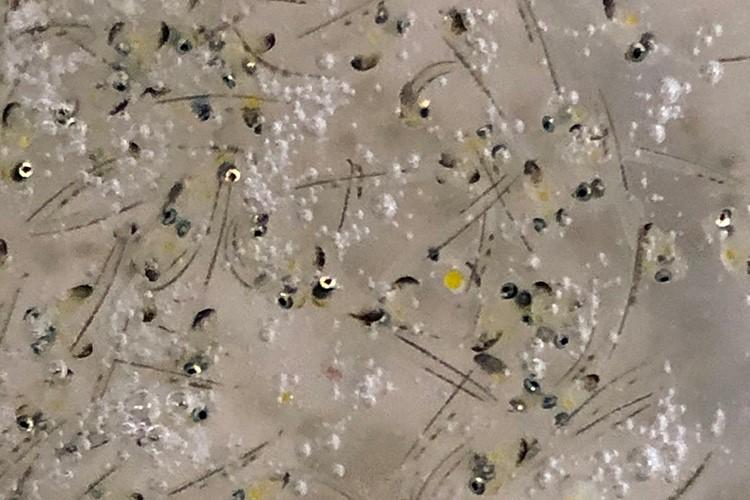
Chief scientist Phil Politis noted: While hanging out in the dry lab, waiting for the net to come up, I was chatting with some of my day watch crew. One of them asked me, “What is something you always look forward to seeing when you come out here?” After thinking for a moment, it hit me. I’ve been waiting this entire trip to see some “eyed” Acadian redfish!
Acadian redfish are ovoviviparous. This means their eggs are internally fertilized and hatch inside the female. She then releases live young. Not all fish do this, so we add an extra maturity stage for redfish to describe this condition. It’s called “eyed,” which simply means the larval fish have developed eyes and are one step closer to being spawned. When we sample these fish, the larvae may spill onto the cutting board, and if you pause for a moment, you can see their tails begin to flicker back and forth. This is the only fish we catch where you can witness the larval fish moving around first-hand.
Eyed, larval Acadian redfish. You can see their shiny eyes, and their bodies are just a couple of millimeters long. Credit: NOAA Fisheries/Christine Kircun
I then asked my fellow sea-going scientists what they most looked forward to seeing, and here are some photos of their faves.
Fan Favorites
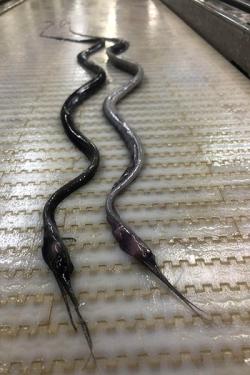
Two slender snipe eels. The head of the one on the right is in better condition. You can see how the upper jaw naturally curves upward so the tips don’t touch. Credit: NOAA Fisheries/Joey Dunphy
Joey Dunphy
Two long slender snipe eels coming down the sorting belt caught Joey Dunphy’s attention. This slender fish has a very thin, elongated jaw. With their mouth open, they’ll move their head back and forth and snag prey, such as shrimp, on their small, hooked teeth.
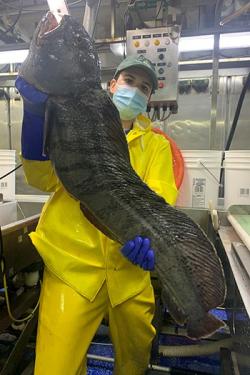
Maggie Mahoney holding a large wolffish. Credit: NOAA Fisheries
Maggie Mahoney
Using extreme caution, Maggie Mahoney held up a mighty wolffish. Almost as long as Maggie is tall, this fish has sharp teeth and a powerful jaw. They regrow their teeth annually because crushing their prey—crabs, starfish, sea urchins and clams—causes a lot of wear.
Katie Rogers
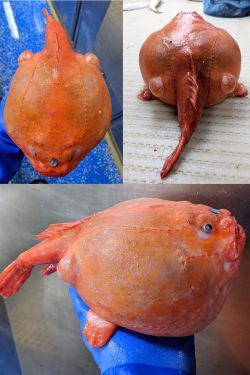
Photo shoot with a red-eyed gaper. Credit: NOAA Fisheries/Katie Rogers
Not to be upstaged by the wolffish, Katie Rogers had a photo shoot for this beautiful red-eyed gaper. This fish is a member of a deep-sea anglerfish family. Typically, it is a little more flat, but it has ballooned itself up due to the change in pressure. Also, it’s hard to miss their deep lateral lines running all over their bodies. If there was a fish version of a baseball, this would be it.
Getting back to more familiar species; the Golden Eagle from Belmar reported very good bluefish jigging as a boat lumit of 3-7-pounders was quickly taken before going into release mode.
The Queen Mary from Pt. Pleasant has also been in on that daily bluefishing excep for the first of their weekly Tuesday tuna trips which produced two bluefins plus many little tunny. and a surprise blast of mostly 11 to 15 pound bluefish in the dark on their way offshore.
Capt. Ron Santee reported a pick of keeper fluke Wednesday while fishing in perfect ocean conditions with his Fishermen from Atlantic Highlands as water temperatures were back up to 68 to 70 degrees. One angler limited, and the pool winner was 4 pounds.
The forecast is for west winds at 5-10 knots before dropping to 5 knots in the afternoon. Showers are possible early and likely later along with thunderstorms.
The CSP issued the following press release relative to Foshery Management Council appimtments:
Commerce Department Announces Regional Council Appointments Washington, D.C. – June 29, 2021 – Yesterday, Commerce Secretary Gina Raimondo announced the 2021 Regional Fishery Management Council (RFMC) appointments.
The recreational fishing community thanks the Administration for considering their preferred candidates and appointing many recreation-friendly council members. These include: Mark Alexander of Connecticut and Mike Pierdinock of Massachusetts to the New England Fishery Management Council; Skip Feller of Virginia, Adam Nowalsky of New Jersey and Thomas Schlichter of New York to the Mid-Atlantic Fishery Management Council; Thomas Roller of North Carolina, Arnold “Spud” Woodward and Judy Helmey of Georgia to the South Atlantic Fishery Management Council; Jonathan “J.D.” Dugas and Billy Broussard of Louisiana, and Dale Diaz of Mississippi to the Gulf of Mexico Fishery Management Council; Corey Ridings of California to the Pacific Fishery Management Council; Andrew “Andy” Mezirow of Alaska to the North Pacific Fishery Management Council, and Matthew Ramsey of Hawaii to the Western Pacific Fishery Management Council.
“We appreciate Secretary Raimondo’s attention to the council appointment process and specifically on appointees who will be focused on conservation, access and opportunity for America’s anglers,” said Jeff Angers, president of the Center for Sportfishing Policy. “The regional fishery management councils grind out the policies that affect federal fisheries, and bona fide recreational fishing representatives at the table are critical to the future of saltwater recreational fishing.”
“The regional fishery management councils are where the rubber meets the road for federal marine fisheries management, so it’s critically important that the recreational fishing community be well represented,” said Glenn Hughes, president of the American Sportfishing Association. “We look forward to working with these new regional fishery management council appointments to continue to advance marine fisheries conservation and recreational fishing opportunities.”
“Serving on a regional fishery management council is a huge commitment, and we truly appreciate the people who have stepped forward to work for the health and conservation of our marine resources and anglers’ access to them,” said Patrick Murray, president of the Coastal Conservation Association. “Balanced representation on the councils is critical to policy decisions that are fair to all user groups.”
“Appointees to the stakeholder-driven regional fishery management councils play a vital role in managing our nation’s fisheries,” said Chris Horton, senior director of fisheries policy for the Congressional Sportsmen’s Foundation. “We congratulate those who were successful in this round, and we look forward to working with them to ensure we have healthy and abundant marine fisheries, as well as access to those fisheries.”
“We are generally pleased with these recent appointments to the regional fishery management councils,” said Jim Donofrio, executive director of the Recreational Fishing Alliance. “Those selected include dedicated people who have the on-the-water experience and a deep understanding of our sport which is greatly needed in the council process. We are also pleased to see greater representation of the recreational fishing community on some of the councils.’
Alexander is the former Assistant Director of the Fisheries Division within the Connecticut Department of Energy and Environmental Protection, where he began his career in 1982. In this role, he managed the Marine Fisheries Program, giving him a comprehensive understanding of fisheries management issues in Connecticut and New England. Additionally, Alexander has the experience of serving as the state’s representative on the New England Council from 2008 – 2016.
Pierdinock has been a recreational angler all his life and for more than 15 years has operated his own small business charter boat operation targeting groundfish, striped bass, bluefish, and large pelagics north and south of Cape Cod. Pierdinock is well-known in the region’s fishing community as a knowledgeable and respected voice on fisheries issues. He has an excellent understanding and command of fishery management issues and has applied his expertise in serving on the New England Council Recreational Advisory Panel, the Atlantic Highly Migratory Species Advisory Panel, the Stellwagen Bank Charter Boat Association, the Massachusetts Marine Fisheries Advisory Commission and as the United States representative on the International Commission on the Conservation of Atlantic Tunas Advisory Committee. He was recently appointed as the New England Recreational Advisor to the Responsible Offshore Science Alliance (ROSA), Executive and Advisory Committees.
Feller is a third-generation owner/operator of a fleet of vessels that includes six recreational fishing and cruising vessels that sail from Virginia Beach. He obtained his 100-ton Masters license in 1984 and has maintained his qualifications since that time. Capt. Feller’s fishing trips specialize in and target tilefish, flounder and black sea bass. He currently serves on the Mid-Atlantic Council advisory panels for summer flounder, black sea bass and tilefish. Capt. Feller also serves on the Virginia Marine Resources Commission.
Nowalsky has demonstrated during his time on the Mid-Atlantic Council exceptional understanding and expertise of the science and legal framework used to assess and manage New Jersey’s most important fisheries. He has proven himself to be committed to striking an important balance between sound conservation and the needs of the fishing community. In addition to his time on the Mid-Atlantic Council, Capt. Nowalsky serves as New Jersey’s legislative proxy to the Atlantic States Marine Fisheries Commission; is acting chairman of the New Jersey Chapter of the Recreational Fishing Alliance, and serves on multiple citizen advisory committees to the New Jersey Marine Fisheries Council. Capt. Nowalsky is also working with offshore wind developers to facilitate input from the recreational fishing sector as offshore wind facilities are designed and put into operation.
Schlichter has been an outdoor writer covering the angling community for over 40 years for one of the country’s largest newspapers as well as writing for local, regional and national fishing magazines. This experience as an active and diligent observer has provided him with the insight to effectively engage the management process and advocate for the best needs of the recreational fishing community.
Roller has extensive experience with state and regional fisheries advisory bodies as well as a strong understanding of the region’s fishing community. He is the owner and operator of Waterdog Guide Service and has for the past 17 years been a full-time nearshore and inshore fly fishing and light tackle guide operating along the Crystal Coast of North Carolina. He is currently serving as a field tester for the South Atlantic Council for-hire electronic logbook and as a member of the Council’s Cobia/Mackerel Advisory Panel. He was also appointed to the newly formed Citizen Science Advisory Panel as a member of the Education/Outreach Action Team. He is a longtime participant in North Carolina’s state management process and was reappointed last year to a second three-year term on the NC Marine Fisheries Commission.
Woodward is the former Director of the Coastal Resources Division of the Georgia Department of Natural Resources (DNR). He is also a nationally recognized leader in saltwater fisheries management and a passionate angler. During his tenure with Georgia DNR, he was actively involved in management of marine fisheries, both commercial and recreational, at the state, regional, and national level. He has testified about marine fisheries management before Congress and the Secretary of Commerce. Woodward also serves as Georgia’s appointee commissioner to the Atlantic States Marine Fisheries Commission, where he is vice-chair.
Helmey is the best-known fishing guide in Savannah, Ga. She is the owner of Miss Judy Charters, which provides inshore, offshore and Gulf Stream fishing experiences from a fleet of three offshore boats and seven inshore boats. She started fishing as a small child with her father, Captain Sherman Helmey about whom she authored the book, “My Father, the Sea and Me.” Helmey’s knowledge of fishing in the waters of coastal Georgia and South Carolina is unparalleled, and she readily shares that knowledge through her popular “how-to” fishing clinics and fishing reports featured in several print and digital media outlets. Always a strong voice for conservation, she has supported fishery management by serving on advisory panels and making her facilities and staff available for data collection.
Dugas is an active and well-respected leader in the Louisiana recreational fishing community. He has 30 years of experience as a recreational fisherman for both inshore and offshore Gulf of Mexico species. He also has a strong understanding of the fisheries management process, having served one term on the Gulf Council and as a state Board Member for the Coastal Conservation Association of Louisiana.
Broussard has lived every sector of marine fisheries: commercial, charter/for hire, and recreational. A licensed commercial fisherman for 30-plus years, he currently harvests crabs but has commercially fished for various finfish his whole life. He is an avid offshore recreational angler whenever possible, and he spent a decade as a charter boat captain. He owned a general store for 20 years that serviced both commercial and recreational fishermen. He currently serves on the board of the Coastal Protection and Restoration Authority, and he served as a member of the Louisiana Wildlife and Fisheries Commission for four separate governors.
Diaz has decades of experience in fisheries management, marine law enforcement, and additional experience in the banking and auditing industry. Throughout his tenure on the Gulf Council, Diaz has demonstrated a fair and thoughtful approach to the marine fisheries management challenges.
Ridings has built strong support from the conservation and sportfishing industry through her years of advocacy and practical approach to fisheries management. While Ridings is not a formal member of the recreational fishing industry, her well-rounded background will provide California with balanced and informed representation on the Council.
Mezirow has participated in both recreational and commercial fisheries for decades and has the respect of both communities. During his time on the North Pacific Council, he has consistently weighed in strongly in support of fishing communities, conservation, reduction of wasteful fishing practices, improved data collection, and has worked hard to build consensus among all stakeholders through diligent outreach.
Ramsey, a lifelong recreational fisherman, believes the connection between people and our natural resources is a powerful force in bringing about change in resource management. He is the Hawaii director of a conservation organization and previously served as the Hawaii fisheries extension agent for NOAA Fisheries. Ramsey is familiar with the Council process and believes in a collaborative approach to fisheries management.
The Mimi VI from Pt. Pleasant has a bottom fishing limited special on Friday. Call 732 370-8019 for info and reservations.
The morning forecast is for west winds at 5-10 knots, dropping to 5 knots in the afternoon. There’s a possibility of morning showers that are more likely in the afternoon.
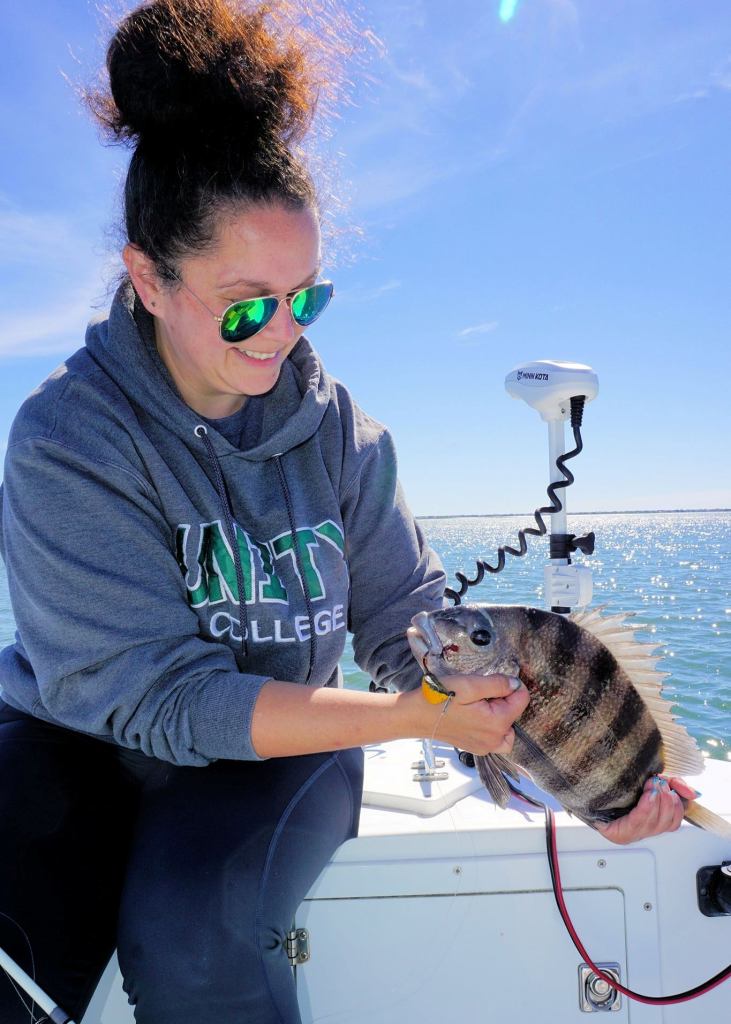
Jim Hutchinson Jr. guided his niece Toni from W.V. to a Great Bay sheepshead on shedder crab last week. Though fairly common in South Jersey, sheepshead are rare north of Barnegat Inlet.
The N.J summer sea bass season runs from July 1 to Aug. 31. Only two sea bass at a minimum of 12.5 inches are allowed as it is intended as a by-catch for fluke fishermen struggling to catch an 18-inch fluke.
That season came a day too late for an angler on the Golden Eagle from Belmar as he had to release “monster” 25-26-inch sea bass. . Bluefish jigging was decent as most fares had to work at it for a limit catch. They start 4:30 p.m. trips tomorrow — except for Wednesdays when healthcare workers and their families sail at no charge in thanks for their efforts during the pandemic.
The Sea Hunter from Atlantic Highlands fished the ocean the last two days to get away from the hot bay. Some legal fluke were picked. but the possibility of showers is keeping them at the dock tomorrow due to few fares being expected.
As is inevitable when south winds blow hard along the Jersey Shore. the surf and inshore waters turn cold from the upwelling and that’s rarely good for fishing
Capt. Ron Santee said fluking from his Fishermen out of Atlantic Highlands was just a pick of keepers under the circumstances, but Bob Chiavarini managed three up to the 4-pound pool winner.
There was better news further out as the Golden Eagle from Belmar reported good bluefishing. It required some work, but most anglers had limits plus releases on jigs.
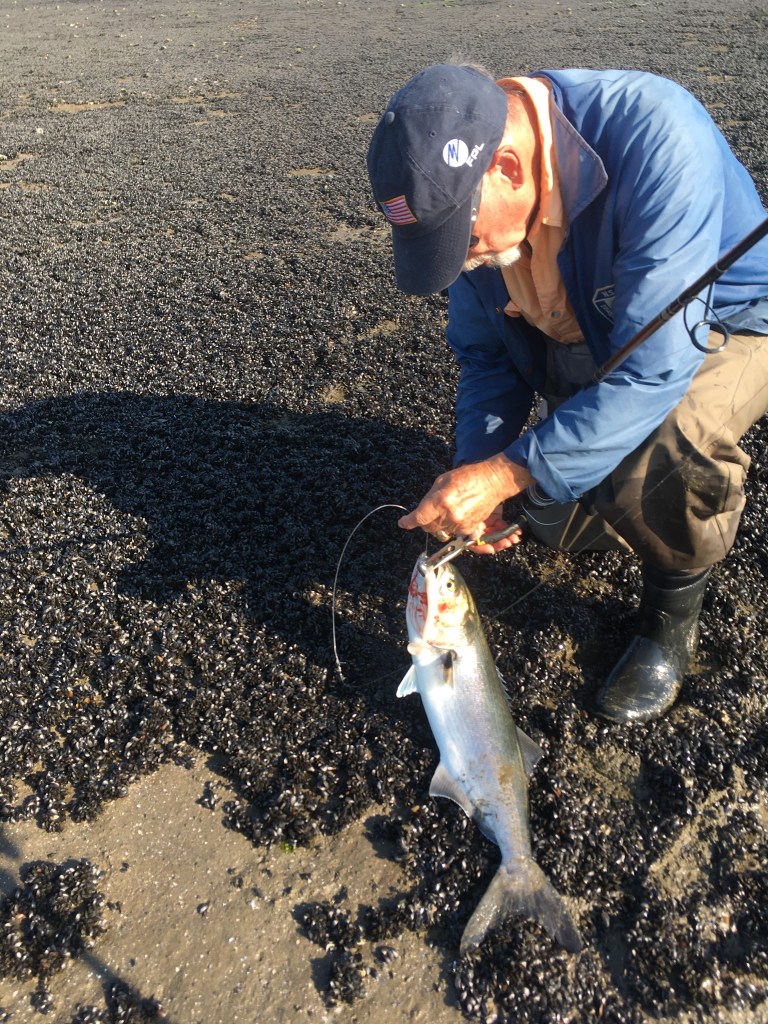
Shark River wasn;t been good to me during my first couple of trips this season, and I still couldn’t raise anything on a popper this morning before moving over toward Bill Hoblitzell who was picking a few blues on plastic. That action died out just as i got lucky with an ice breaker and released a blue in the 6-ppund class on a Z Man 5-inch white paddletail jig.
The Canyon Runner from Point Pleasant has a last minute open boat spot on the July 6-7 canyon overnighter.The price is $1800 all in — including tip, food and drink. Call 732 272-4445.
The morning forecast is for southwest winds at 10-15 knots which increase to 15-20 in the afternoon plus gusts to 25 and possible showers or thunderstorms.
The Canyon Runner from Point Pleasant reports that not only have they been doing very well. but that good fortune also applies to boaters in the Canyon Runner Coaching Service.
That includes Gotta Get which limited on yellowfin tuna from 50 that included a 180-pounder which is very large for the Atlantic Ocean.
The Canyon Runner had the Marty Led charter into yellowfins when they started trolling at 5:30 a.m. and were limited on yellowfins and into relese mode before the tired group opted to return early.
The Golden Eagle from Belmar reported a big improvement in the bluefish bite today as the 3 to 9 pund choppers provided early limits.
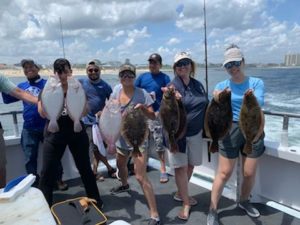
The Ocean Explorer from Belmar has been doing well with ocean fluke as shown in this weekend shot.
Small craft warnings are up. but the south wind should diminish after midnight. The morning forecast is southwest 10-15 knots.
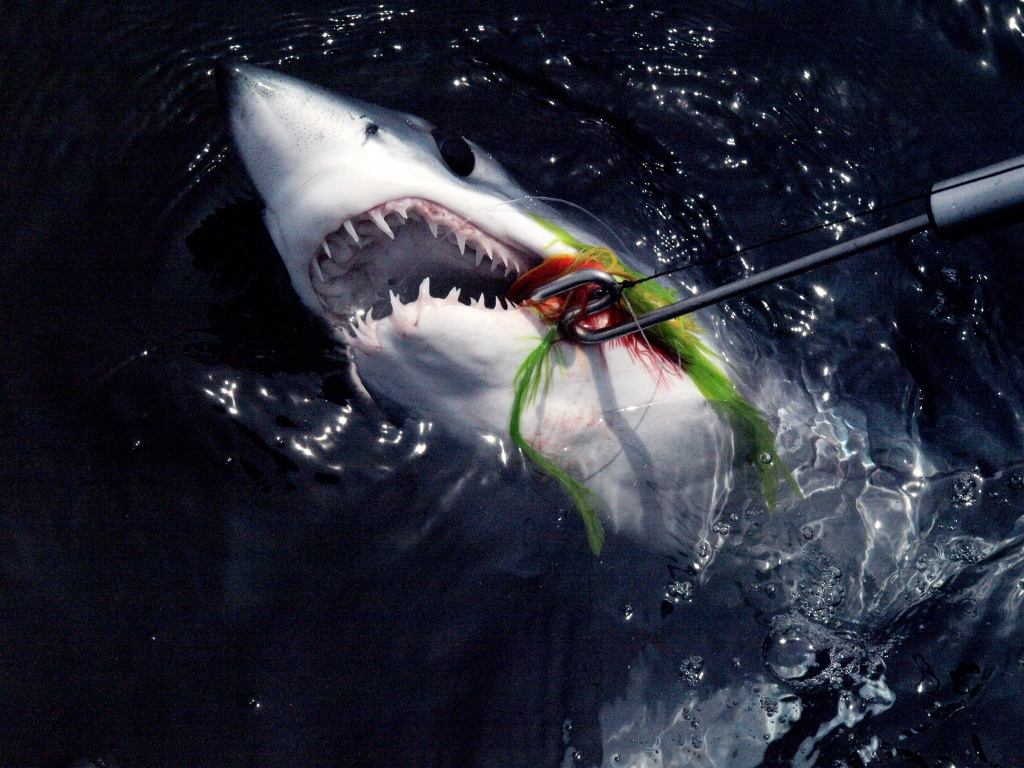
There have been hardly any mako shark reports this year, so you can imagine the odds of trying to catch one on a fly. Yet, world class Long Island fly fisherman Angelo Peluso did just that a couple of days ago. That was the sixth he’s caught on the fly, but the toughest of all.
Bob Matthews at Belmar Marina noted that fluking has been up and down, with today being tougher as water temperatures dropped after yesterday’s hard south winds. Bob noted that triggerfish have moved into Shark River. The Golden Eagle reported reading lots of 4-8-pound bluefish. but they didn’t hit as well as they have been.
There was better news about blues from Betty & Nick’s Tackle in Seaside Park as John Bushell Jr. said 2-4-pounders were hitting mullet baits in the surf. That was the first good report on them in some time.
The forecast is for suth winds at 10-15 knots in the morning before increasing to 15-20 in the afternoon,
Dave Lilly of Hazlet is probably the best fluke fisherman in N.J., as he’s proven time and again in tournaments. Since there’s no money on the line, he’s willing to let raders of this blog onto sme hot fluking for 3-to-5-pounders that he found during the last three days in the back of Raritan Bay.
Those keeper-sized fuke are holding in 12 to 20 feet of water and can be caught on 5-inch Gulp Swimmng Mullet when there’s a decent drift. Both white and chartreuse have worked for him. Dave warns not to add bait in order to avoid being bothered by small dogfish.Surprisingly, few, if any shorts were caught by this technique while using a long leader rigged far enough off bottom to avoid dragging into weed.
The Fishermen from Atlantic Highlands noted that is was too rough to fish in the ocean this morning. A move inshore was slowed by a lack of drift before the tide changed — and then the southeast wind stopped the drft. Some fares caught two keepers among shorts.
Bluefish jigging off the northern Shore held up today. though it required more effort. The Golden Eagle from Belmar descrhibed it as decent as skilled anglers limited while others had to work at it longer. The Queen Mary from Pt. Pleasant jigged blues from 3 to 8 pounds early before the tide dropped out around 10:30 — after which it was just a pick. They have a few spots left on the June 29 tuna trip.
The Jamaica from Brielle did very well with the blues yesterday, and is getting ready to sail a half-night ling trip at 7:30.
The forecast is for south winds at 10-15 knots in the morning before increasing to 15-20 in the afternoon.
Some readers may have noticed in Capt. Dave De Gennaro’s description of his Barnegat Inlet worm drifting technique that he specified using worm hooks with his float rigs which also catch blackfish at the rocks. There’s nothing illegal about that technique since multiple species are involved, though the predominance of short stripers dictates that circle hooks should be employed. Dave went right over to his local tackle shop and bought the last package of small circle hooks left. I’m sure he’ll find them to be just as effective on blackfish as I’ve found them to be on tog in Pt. Pleasant Canal…
I’ve been an advocate of circle hooks ever since starting to use them with clam baits many years ago as they not only reduce swallowed hooks but also produce more hook-ups when used properly by simply reeling into the fish rather than striking. Unfortunately, putting worms on a circle hook is unwieldy. When manufacturers tried to deal with that by offsetting the hook, gut-hooked fish became common. That’s why only non-offset circle hooks qualify when targeting stripers under the rules.
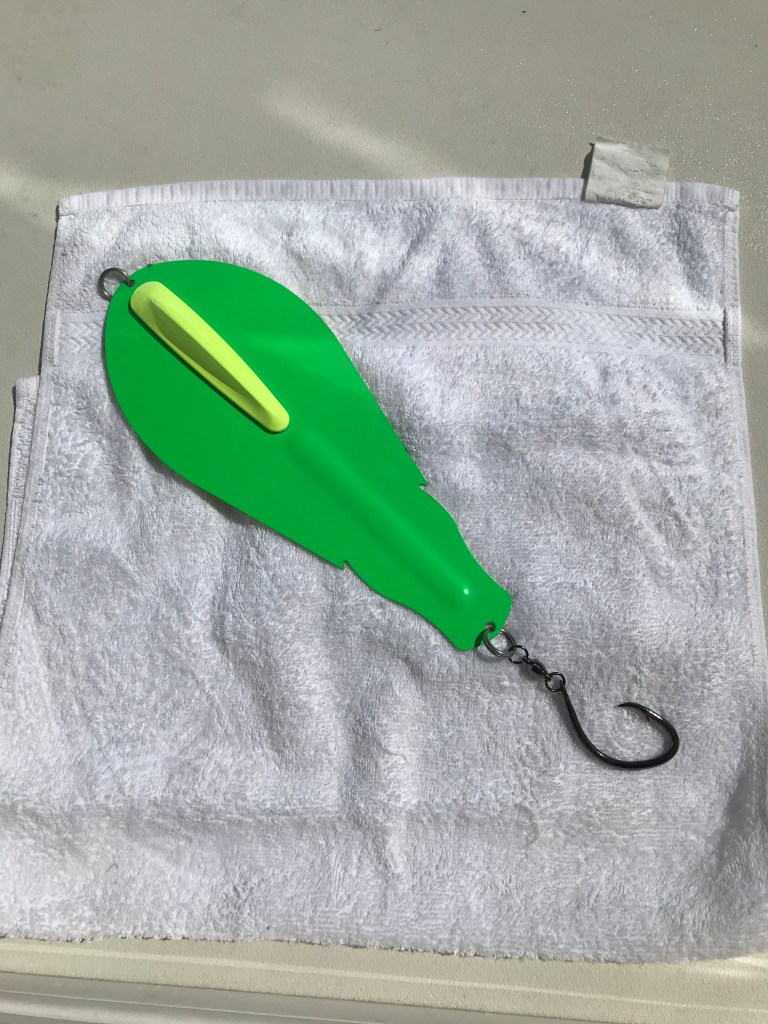
Circle hooks have another huge advantage for the angler as once they set in the jaw they rarely come out even if slack develops in the line. Jeff Merrill has such faith in them that he’s taken the next step and re-rigged his bunker spoons with a single swiveled circle hook that prevents large fish from using the spoon weight to dislodge the hook. That rigging (see photo below) has not only worked with stripers up to 49 inches, but also with a thresher shark snagged in the tail last fall.
pt. pt.
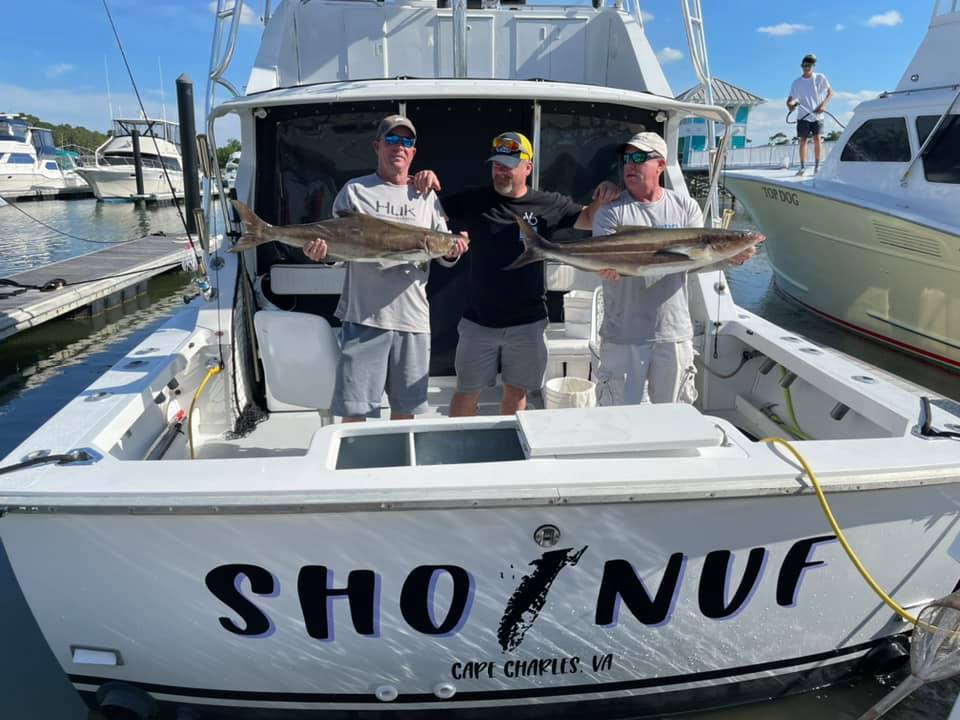
Chuck Many took a ouple of days to travel south for casting to cobia from Capt. Clinton Lessard’s SHO-NUF Sportfisjing out of Cape Charles, Virginia (757 710-0098) with great success.
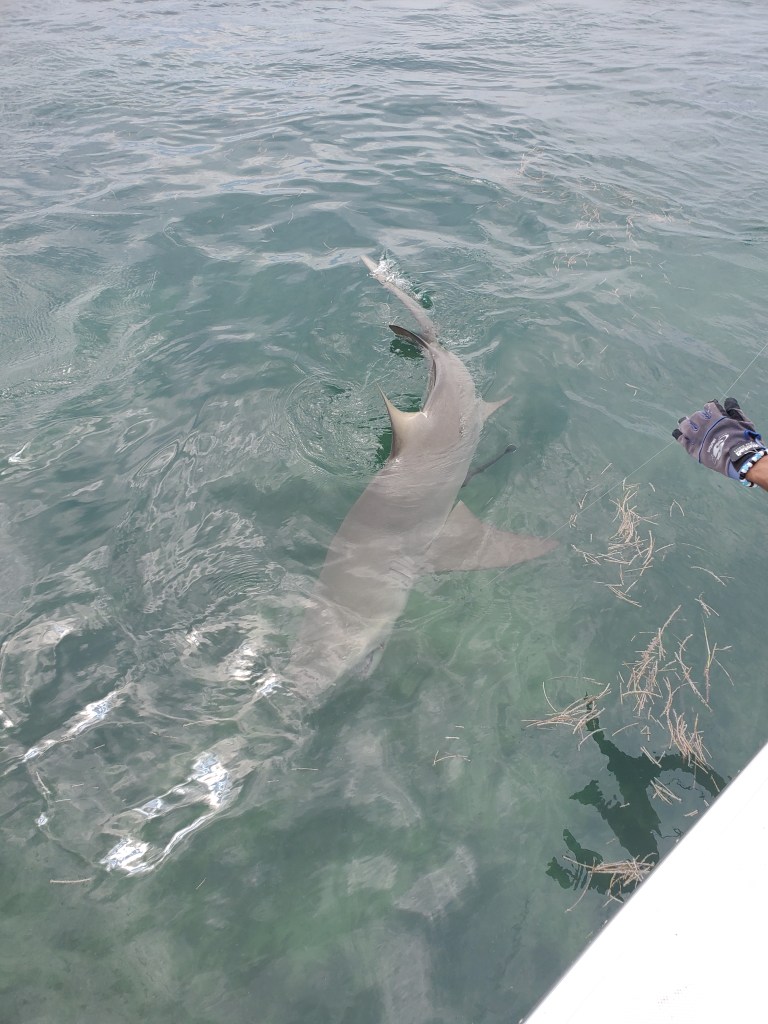
Capt. Joe Massa of My Three Sons at Morgan Marina took his sons Joseph and Nick to Key West for a couple of days. They got out on a small boat charter for lemon sharks up to 100 pounds in two-foot depths on spinning tackle by chumming and casting snappers to the toothy critters.
The Golden Eagle from Belmar reported a coninuation of very good bluefish jigging today.
The Sea Hunter from Atlantic Highlands had good fluke action with a couple of limit catches included.
Jim Lauro cast his Band of Anglers Dart Spin for three small bass and a blue;Vinny D’Anton and I did nothing in Shark River this morning before fishing sand fleas in the near-by rough surf asVinny caught three stripers and I broke the ice with one — though all were small. Jim Lauro cast his Band of Anglers Dart Spin for three small bass and a blue.
The forecast is for south winds at 10-15 knots with gusts to 20 plus possible patchy fog in the morning.
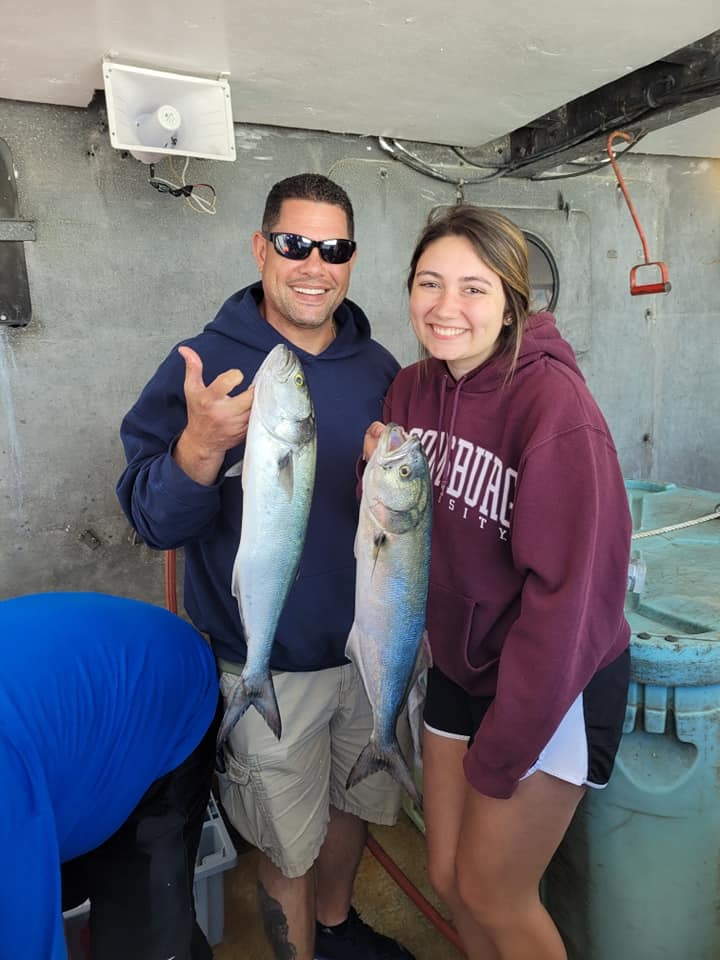
Bluefish populations are down, but there are suddenly lots of them off the North Jersey Shore. The Jamaica from Brielle reported that even novices were jigging them this morning as the choppers ranged from 3 pounds up to a 12-pound pool winner by Marc Stepper from Old Bridge.
The Golden Eagle from Belmar wasn’t fishing on those inshore blues as they had a special tuna trip. That worked out well as they were heading back after catching 20 to 30 school bluefins plus little tunny — and also 150 to 200 big bluefish. Their tuna trips start on Monday July 12 and then every Monday after that in July and August.
There was also good news on the fluke front as the Big Mohawk from Belmar reported their first trip on Wednesday produced some limits with fish in the 5-7-pound class included and lots of short action. They sail at 6 a.m.
At Atlantic Highlands, the Sea Hunter had its first good fluke fishing Wednesday with five or six limits among lots of shorts; The Fishermen’s first fluke trip that day was successful as one angler had two keepers out of 18, and another limited. Th pool fluke was 5.9 pounds.
Monmouth County surfcasting was slow again as I managed a 27-inch striper on sand fleas for the second day in a row. I saw Jim Louro catch two small bass on a Band of Anglers Dart Spin, while Vinny D’Anton missed one on a Chug Bug. I also caught a small smooth dogfish which was the first we’ve ever hooked on sand fleas.
The forecast is for east winds at 5-10 knots before going southeast in the afternoon. Morning showers are possible.
As noted in last night’s blog, Capt. Dave De Gennaro had a lot of action on his last trip with Hi Flier from Barnegat by drifting sandworms in the inlet and off the sedge banks. Following is an account of how he accomplishes that;
“The bulk of them we caught floating a whole sandworm under a bobber right in the inlet jetty. About 12 feet of line under the float, 30 inches of 20 lb fluorocarbon leader, and a #1 bronze baitholder hook. Use a small splitshot over your leader to help keep it down. Let it float right over the rocks, most of the hits come right before it hits the first rock. Caught more than a few nice tog, also, but it’s not open season, so they were released. On the bay side we use the same worms to tip our 3/8 to 1/2 oz jigheads for the half pint stripers behind the sod banks. Just drop them to the bottom and vertical jig them with a short, sharp sweep. ” Hi Flier may be running open Thursday and Friday from 11 to 4. Call Dave at 732 330-5674.
Conditions looked good in the Monmouth County surf this morning, despite the cold air temperature, but Vinny D’Anton and I weren’t getting any hits on sand fleas. Vinny finally got a hard hit that didn’t hook up, and my only take turned out to be a heavy 27-inch striper.
Tommy Cox didn’t do anything casting lures early, but he came up with the catch of the day when he picked up a dead spiny puffer on the beach. What that tropical species was doing in our cool waters is anyone’s guess.
The first mention of a North Jersey cobia came from Capt. Joe Massa of My Three Sons at Morgan Marina. He not only limited on fluke Sunday at Shrewsbury Rocks, but also hooked into something that was running line off his light tackle. One look at the fish was enough to identify it as about a 15-pound cobia before it broke off.
Bluefish jigging was hot today off the North Jersey Shore. The Golden Eagle from Belmar reported a boat limit — and also had some Spanish mackerel which were the first reported. They are chartered tomorrow, but will be back sailing open Friday morning — while also starting daily 4:30 p.m. (except Wednesdays) evening trips.
The forecast is for east winds at 5-10 knots in the morning before increasing in the afternoon to 10-15 with gusts to 20 knots.
The Mimi VI from Point Pleasant has open bottom fishing trips set up for 6 a.m. Thursday July 1 and Monday July 26. These limited trips cost $110 and spots must be reserved by calling 732 370-8019.
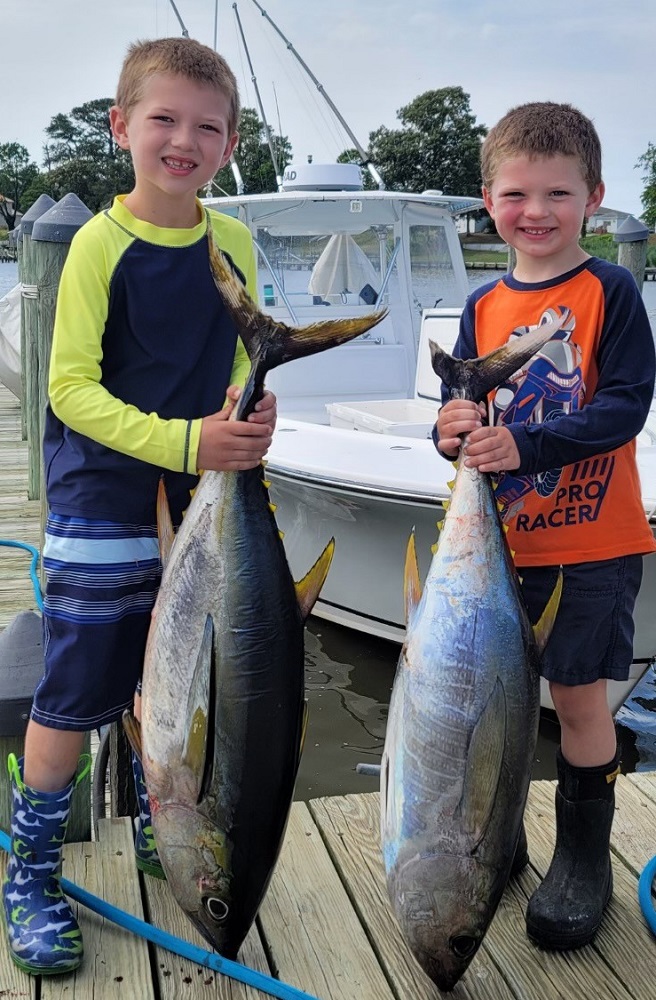
The Canyon Runner from Point Pleasant reports a hot yellowfin tuna bite in the eastern canyons plus epic swordfishing for their coaching members.such as Dan Bush who’s proud of his sons Luke and Jake who each reeled in a yellowfin from start to finish.
 Tight Lines