The offshore season is upon us already, with two of the traditional ones getting started.
The 65th Big Rock Blue Marlin Tournament starts Monday in Morehead City, N.C., while the Manasquan River Marlin& Tuna Club Bluefin Tuna Open kicked off today.
The Manhattan Cup got favorable weather conditions yesterday, but no results have been reported.
Fine sea bass fishing continues off the Jersey Shore. The Golden Eagle from Belmar was able to make long drifts which produced many limits plus a showing of fluke.
Grumpy’s Tackle in Seaside Park weighed in a surf fluke at 3.36 pounds after being taken on Gulp by customer Bob.
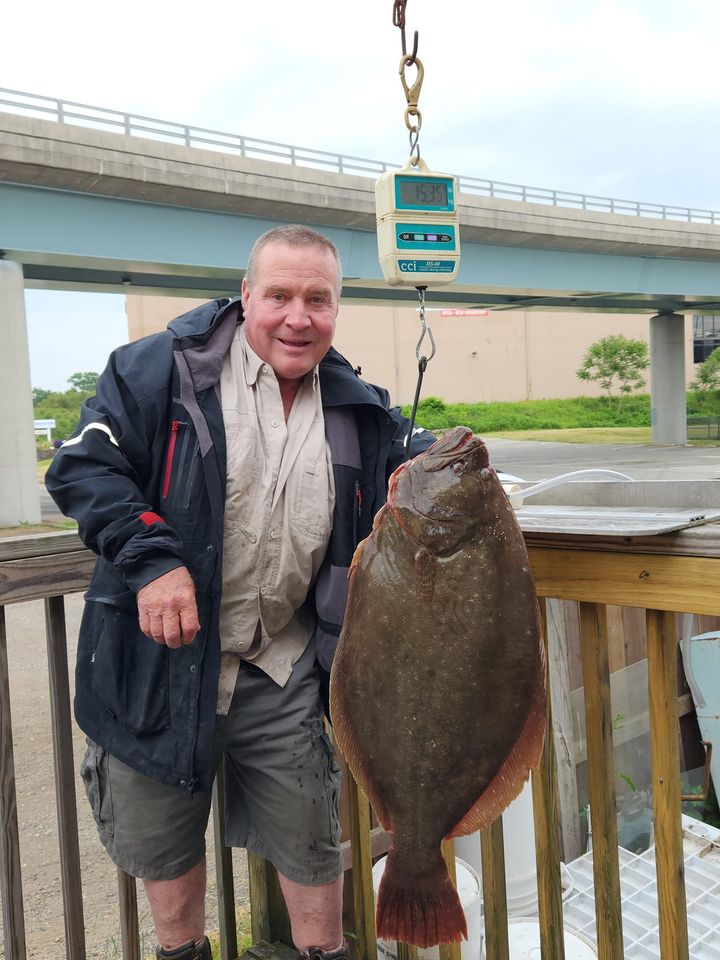
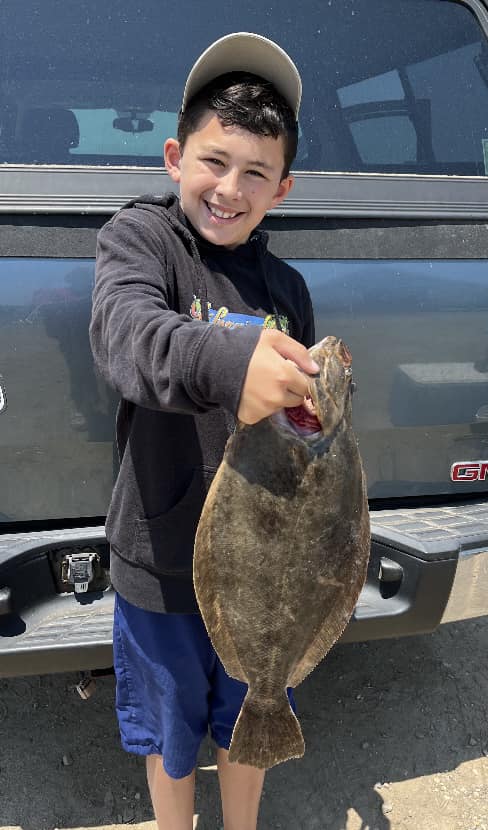
The Connecticut state record fluke may have been boated this week. Bill Proulx weighed the 32 5/8-incher in Hilyer’s Tackle at 15,30 pounds..
Sunday’s forecast is for south winds at 5-10 knots before increasing to 10-15 plus gusts to 20 in the afternoon.
Vinny D’Anton faced very low water conditions early in the morning but made long casts with a Super Strike popper to catch a couple of stripers in the 22-inch class before switching to sand fleas.
Mike Monte called from Nantucket to report the island is surrounded by stripers from 25 to 35 inches that are even being caught in the harbor. The action is on small swimming plugs.
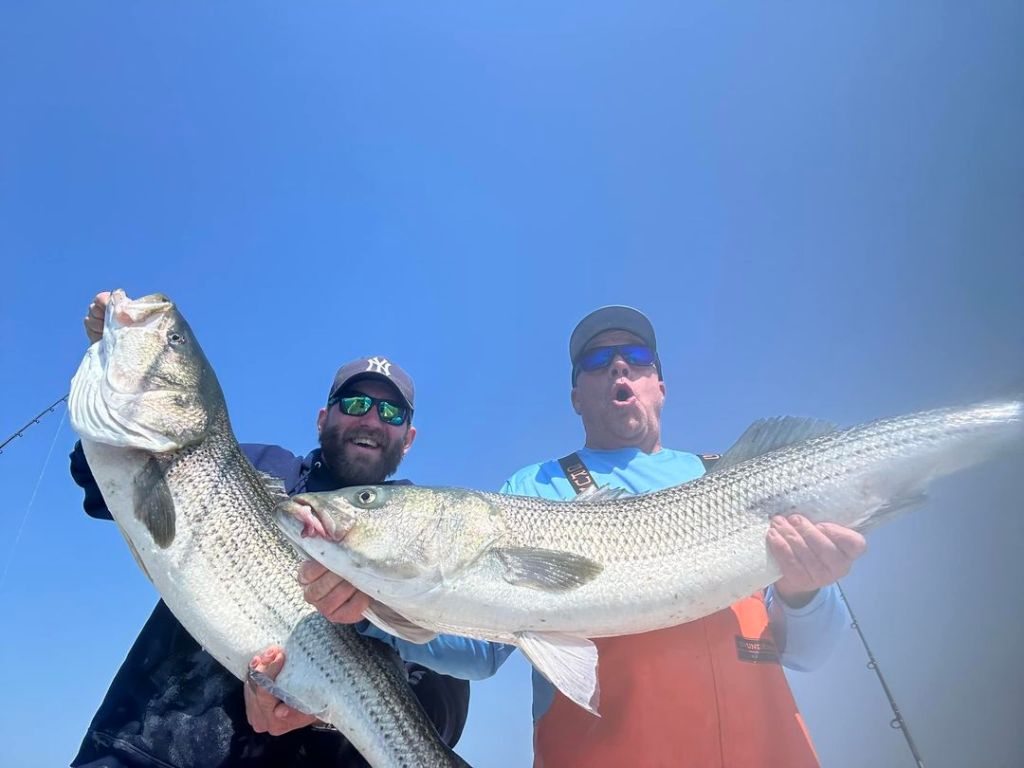
Who says you need big baits for big fish? Vinny D’Anton has been proving the opposite in the Monmouth County surf. This morning he started out witChug Bug and nailed a small bluefish before switching to sand fleas. It didn’t take long before he beached a 28 1/2-inch striper he then topped that with a 33-incher!
The Big Mohawk from Belmar had another great day of sea bass fishing with many limits as that fishery continues to hold up.
Saturday’s forecast is for northwest winds at 10 knots before shifting to southwest in the afternoon.
Most fishing tournaments have a rain date, or may be postponed due to bad weather. However, in the case of the Manhattan Cup he venue has been paid for along with all the food — and the event must go on.
The first time I fished the Manhatten Cup, the conditions couldn’t have been much worse with rain, wind and even hail. As if that wasn’t bad enough, during the afternoon a tornado warning was issued. The Manhataen Cup was actually in Manhattan at that time, so the committee had skippers take shelter in Staten Island while everyone boarded a party boat there for transportation io the festivities in Manhattan.
There should be less drama ait Liberty Landing tomorrow as the forecast is for light west winds in the morning before a chance of showers and thunderstorms in the afternoon.
The Golden Eagle from Belmar reported another very good day of sea bass fishing with many limits plus some ling and fluke.
That’s a new one for this blog — and it’s in effect until 11 p.m. after a day of the worst toxic air the NYC area as ever endured due to natural causes. My internet has been out of whack all day, but I did see one marine weather forecast for tomorrow that calls for northeast 5-10 knots before going southeast in the afternoon.
The Big Mohawk from Belmar reported another boat limit of sea bass. It was a pick at anchor in the morning until they were able to drift in the afternoon for more and bigger fish by jigging.
Capt. John McMurray reported a great day of big NYC stripers that were right on the surface hitting lures.
There have been times when a sea bass opening resulted in a flurry of action before cooling rapidly, but there have been no complaints about the current N.J. run so far. Good reports keep coming in as party boats often limit out all patrons — including those whose skills may leave something to be desired. It appears there are plenty of keepers to carry the fishery through the June 18 finish.
Jon Falkowski of Linden reported a quick limit couple of days ago on the Golden Eagle from Belmar — just as the boat had reported. Jon used bait, but jiggers did as well.
Ben Green posted on Facebook that he had a fantastic sea bass trip today on the Capt. Cal 2 from Belmar as big ling were also mixed in.
The Jamaica from Brielle also reported some ling Monday as sea bass limits were filled.
As good as yesterday’s sand flea action was in the Monmouth County surf, Vinny D’Anton said it was even better today. He caught five from 28 1/2 to 30 inches. Tommy Cox is a lure casting pro, but was talked into fishing the fleas and caught six up to 27 inches,
The forecast is for northwest winds at 10 knots before going southwest in the afternoon.
Chuck Nany reported a short afternoon trip on his Tyman produced mayhem with big stripers.
Big stripers offshore like big baits such as bunkers and eels, but in the spring and summer surf the biggest bass are often attracted by very smalls baits– sand fleas.
The Monmouth County surf produced a 34-inch striper on sand fleas this morning for Frank Manzi, but Vinny D’Anton stuck it out and did even better with a 37-incher on the mole crabs. He also added a fluke on those baits, which aren’t a favorite of that species.
Sea bass fishing remains very good. At Belmar, the Big Mohawk reported a 30-man limit with most caught on bait though the few jiggers did as well. The Golden Eagle had limits early enough to switch over to other species. They caught six short fluke plus some 2-3-pound blues.
The forecast is for northwest winds at 10 knots with possible showers.
Andrea’s Toy from Point Pleasant sent the following report”
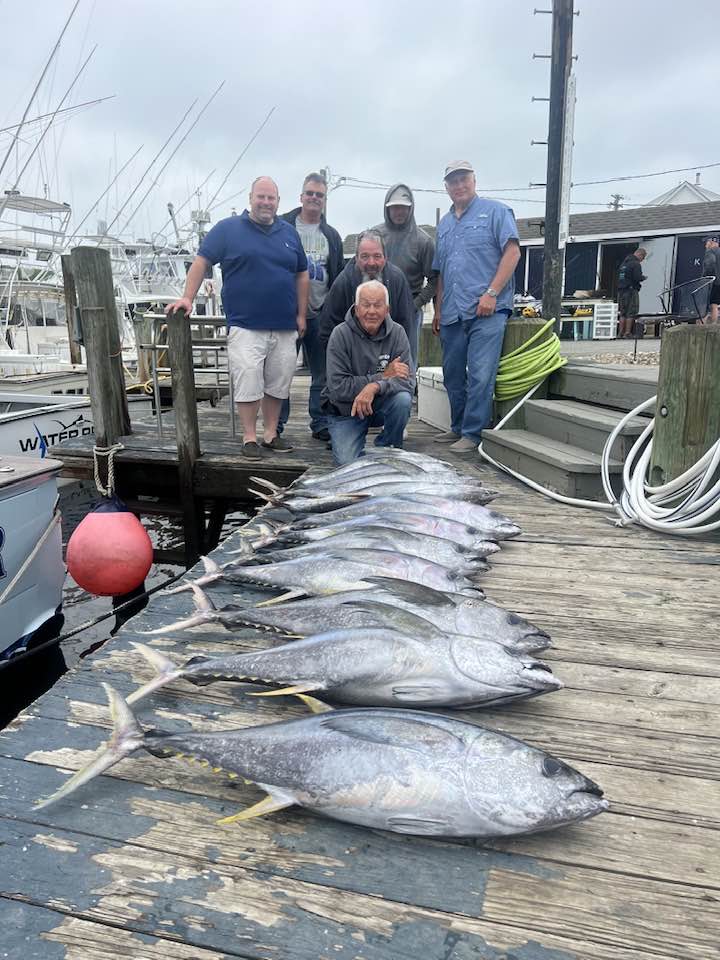
Capt. Matty got our canyon season started on the right foot, and broke in our new 39ST in fine fashion, while putting out the Chatter tracker bar the first fish hit, he proceeded to have a steady pick the rest of the morning going 7-10 on yellows, great job Capt Matty/Chris and to the bunch of regulars who fought the fish , Gary, Russ, Jeremy, Anthony and Kal. Way to go guys”!”
Capt. Fred Gamboa will be in Washington on Tuesday to testify about the vessel speed restrictions that will make offshore fishing more expensive and inefficient in order to guard against a million to one chance of running into a right whale.
From the JCAA:
Sign up by 6/5 to take advantage of the early entry fee. 7th ANNUAL JCAA FLUKE TOURNAMENT – 6/17/23
WIN OUR $50,000 DOORMAT FLUKE PRIZE as Ted Gaydos did last year with his 12.45 lb fluke.
WIN THE DRAWING FOR A 16′ GODFREY PONTOON BOAT AND A LOAD RITE TRAILER donated by New Jersey Outboards and a 25 HP outboard donated by Yamaha. Total value $31,000! Awards ceremony at Resorts Casino on 6/23. To enter online or for a printable application or for complete details visit http://www.jcaa.org.
The Jamaica from Brielle not only had fine sea bass fishing Friday, but also reported an exceptional inshore pool winner of 5 pounds by James Kearney of Toms River,
The first white marlin of the season at Ocean City, Maryland was released on June 2 as Restless Lady II from Sunset Marina won a $5.000 prize by finding it in Baltimore Canyon.
Monday’s forecast is for north winds at 15 knots plus gusts to 20 before going northwest at 5-10 knots in the afternoon.
Giant tuna fishermen may be wondering just what NOAA Fisheries is trying to accomplish after this week’s announcements.
As noted here, they increased the commercial General category daily limit from one large medium or giant (over 73 inches) to three, and then sent a warning for those fishermen. due to market conditions, to make sure they have a buyer who will take their fish prior to going fishing.
NOAA Fisheries also closed the New England region recreational trophy over 73-inch season from June 5 to Dec. 31 as the tiny quota has already been exceeded.
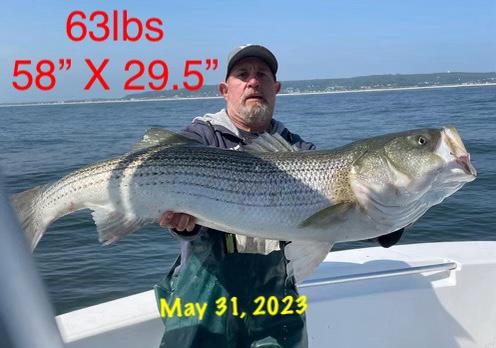
Here’s the photo of the largest striper reported to this blog so far this season– a 63.09-pounder by formula hooked on a live bunker from Capt. Vinny Vetere’s Katfish out of Great Kills, Staten Island by his mate, Brian before a successful release. Vetere said this year’s striper fishing has been the best ever, and is continuing at that pace.
Jim Hutchinson Sr. reports “
Memorial Day weekend has passed in Beach Haven, and summer is right around the corner. If recent fishing trips by the captains of the Beach Haven Charter Fishing Association are any indication, 2023 looks be a good fishing year.
Right now, black sea bass are around the inshore artificial reefs, the summer flounder are all over the bays and inlets, small schools of bluefish are racing around, and there are still good numbers of striped bass to be found.
Captain Connor Smilon of “Fish Hawk Charters” reports good action in Great Bay with multiple keepers per trip and “plenty of throwbacks.” He has also run into small blitzes of 2-3-pound bluefish early in the morning on the way to the fluking grounds.
Captain Max Goldman reports good action on black sea bass on the “Star fish” on the inshore artificial reefs. The top day thus far had a total of 18 keeper fish. The action is hot and furious with numerous undersized fish also hitting the baits.
Captain Steve Palmer reports the initial trips on the headboat “Miss Beach Haven” have been successful ones. A wedding group of the Karr groom and groomsmen had a blast with steady fishing on sea bass, making to port in time for the rehearsal. Another recent trip with Captain Bob Yates and mate Max was a success with both sea bass and fluke providing dinners for many happy anglers. Steve advises the boat will be running a variety of trips this summer.
Captain Brett Taylor of “Real Reaction Sportfishing” had regular client Bob Dodds, his cousin Joe, and Boston Bob on a 4-hour charter. They had decent tide, terrible slime, and stiff winds for a good portion of the trip. Despite the elements, Captain Brett says they ended with 4 decent sized fluke to just over 5 pounds, and 3 others they wanted back.
Additional information on the Beach Haven Charter Fishing Association can be found at www.BHCFA.org
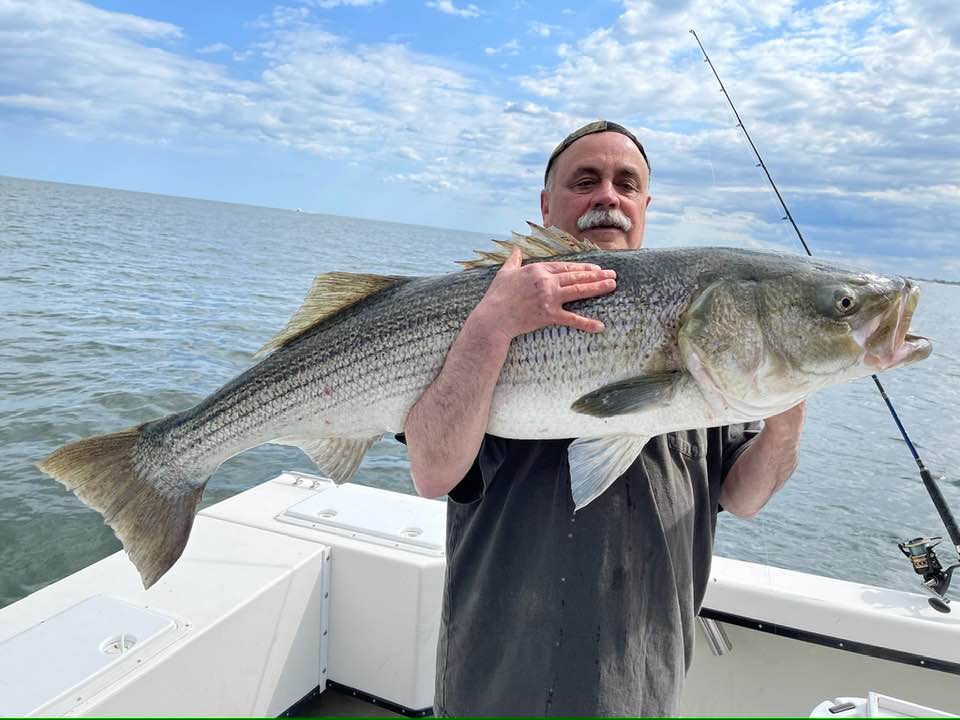
Pennsylvania angler Seth Wakefield reports “I’ve been very fortunate to have some very good friends who have I’ve been able to learn from each year. Chuck Tyman Manny is one of them. Every trip out I learn more and more. The brothers and I had an incredible trip the other day out on the Tyman! Doubles, triples, quadruples on eels and plugs. Eels off the back of the boat and plugging off the front. Always a blast with lots of laughs! Ended up the day with 34 big fish up to 50lbs. Another super memorable day.”
Hans Kaspersetz said his first trip offshore with Blue Runner out of Pt. Pleasant was a good one!
A small craft advisory is up through Sunday afternoon. The morning forecast is for north winds at 15-20 knots before dropping to 10-15 in the afternoon.
During my early days fishing for sharks over half a century ago there were no thresher sharks being caught in NY/NJ Bight, though I knew they were considered a possibility in the area. However, there were also few bunkers at that time. Fisheries management which has led to great numbers of bunkers inshore changed everything, as anglers now often hook up with a shark we weren’t sure existed even when we don’t want them while seeking stripers in bunker schools or even drifting for fluke.
The first report I got this spring was from Capt. Lou Grazioso who did the butchering job yesterday on a 425-pounder caught by Chris Schmidt from his 27-foot World Cat after hooking it on a live bunker. With only two girls aboard, that thresher couldn’t be boated and had to be towed all the way to Hoffman’s in Point Pleasant.
Some more offshore news came in today from Capt. Rick Woerner, who reported a quick trip to Wilmington Canyon produced yellowfin tuna
All striped bass and sea bass reports remain very positive, though the Jamaica from Brielle cautions that the sea bass season ends after June 19.
Vinny D.Anton got into a couple 28-inch stripers this morning in the Monmouth County surf while baiting with sand fleas.
There’s a small craft warning up for Saturday morning to night. The forecast is for northeast winds at 20-25 knots before dropping to 15-20 in the afternoon.
The Staten Island Tuna Club is sponsoring a seminar on tuna fishing with Canyon Runner skipper Deane Lambros on June 9 in Proving Ground Waterfront Rest. at 56 Shrewsbury Ave., in Highlands, N.J. with a buffet dinner and many raffle prizes. Call Chip at 201 390-6544 for the $49 tickets.
Chuck Many’s brother and son in on the Tyman striper action
Joe Balzamo said it was all stripers over 40 inches today off Brooklyn.
Jim Hutchinson Sr. had his grandsons in Barnegat Bay today –Trent caught a fine fluke while Troy added a big blueclaw that hung on too long.
BOATS NEEDED! With the addition of new sponsors and larger roles of longtime sponsors we’re in need of boats for The 2023 Manhattan Cup at Liberty Landing Marina June 9th. We’re hosting the most warriors we ever have. 45 brave men and women that put everything on the line for our freedom. We’re able to host these veterans because of the loyalty and support of our sponsors that join us for the event. If you are able to take 4 people out fishing for blues and bass and can supply the tackle please think about joining us and being part of a special day with the best and the bravest people around! Each captain and mate receive a gift bag and join in on the festivities before and after fishing. Please share this post. DM for more details. #fishing#charity#captain#veterans#nyfishing#passion
The forecast is for southwest winds at just 5-10 knots with a slight chance of showers and thunderstorms.
Vinny D’Anton and Frank Manzi fished the Monmouth County surf with sand fleas and had a pick of shorts in the 23-inch class. Frank had first checked Manasquan River, where there had been lots of blues yesterday, but only found a lot of anglers catching a few small blues.
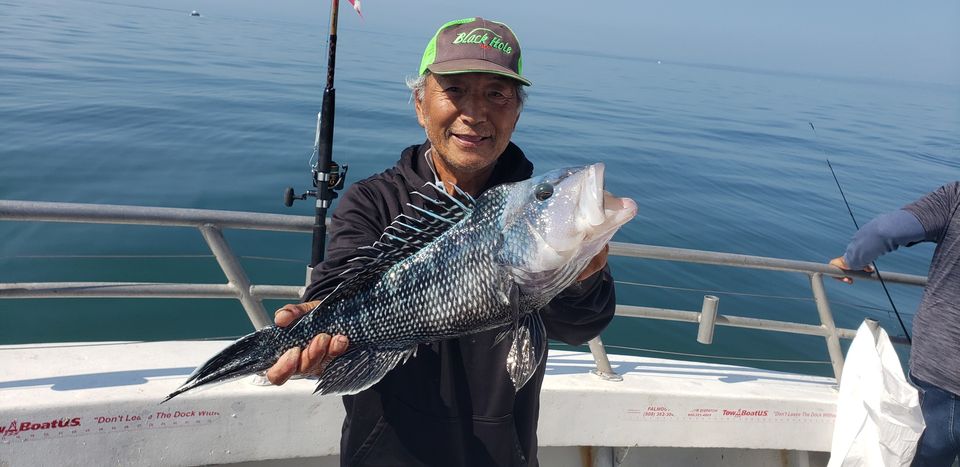
Kil Song has been traveling from Panama to Texas to N.J. to R.I. where he jigged squid at night last week — and loaded up on big sea bass at Cape Cod yesterday aboard the Patriot from Falmouth.